Particle System Demo
Fireworks System Demo
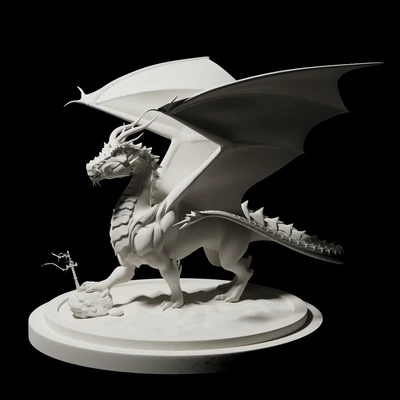
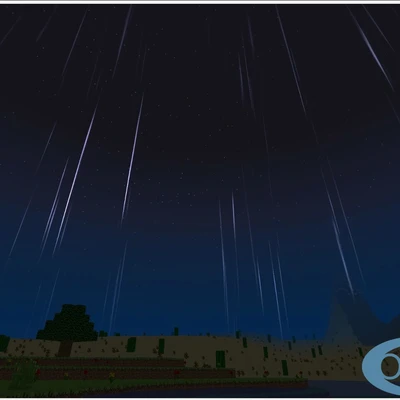
Fireworks made in Houdini
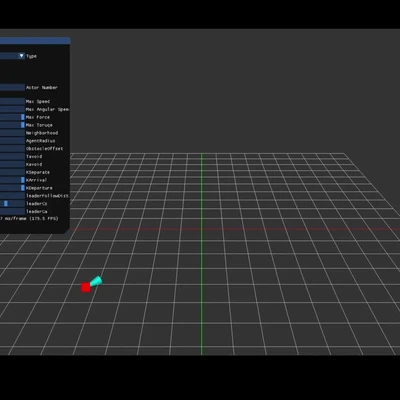
A real-time particle system editor and fireworks simulator built in C++ with OpenGL. The application features a
physics-driven particle engine that supports gravity, aerodynamic drag, wind forces, and attractor/repeller fields,
with both Euler and 2nd-order Runge-Kutta numerical integration methods. Users can interactively tweak simulation
parameters — spawn rates, lifespans, colors, scales, and forces — through an ImGui control panel and see the results
update in real time.
The fireworks mode simulates rockets with a full lifecycle state machine: rockets launch upward, detect apex via
velocity thresholds, then explode into rings of color-matched sparks distributed across the XZ plane. Each rocket
can chain up to three consecutive explosions, and sparks interact with gravity, drag, and ground-plane collisions
with energy loss on bounce. A jitter system adds controlled randomness to position, velocity, color, and scale at
spawn time, giving the effects a natural, organic feel.
Each particle carries a 12-element state vector packing position, velocity, accumulated forces, mass, and
time-to-live into a single flat array, and the integrator steps the entire vector forward each frame. Forces are
accumulated per-particle each tick — drag is computed from air density, a drag coefficient, cross-sectional area,
and the squared velocity magnitude, while attractors and repellers apply distance-based directional forces.
Explosions use a Fibonacci sphere distribution across three concentric velocity layers to scatter sparks evenly in
3D rather than clumping them on a flat ring, and the rendering pipeline interpolates each particle's color, alpha,
and scale between start and end values based on remaining lifetime.